South Carolina just elected a Democrat to the Senate for the first time since 1998.
South Carolina just elected a Democrat to the Senate for the first time since 1998. Annie Andrews, a pediatrician, is projected to flip a Republican-held seat. Roy Cooper is projected to flip North Carolina, and Jon Ossoff is projected to win reelection in Georgia. ABC News now projects Democrats will control both the House and the Senate.
For context, the Senate went into Election Day at 53 Republicans, 45 Democrats and 2 independents. The House stood at 218 Republicans, 214 Democrats, 1 independent and 2 vacancies. Those margins were thin, and the projections now have both flipping.
Markets reacted quickly. Bloomberg reported S&P 500 futures fell about 1%, wiping out an earlier 0.5% gain, while Nasdaq 100 futures dropped 1.8%. At the session low, E-mini S&P futures were down 1.41% and Nasdaq 100 futures 2.44%. They have since pared that to -0.85% and -1.31%.
The 10-year Treasury yield closed at 4.95% and was trading near 4.90%, and the dollar slid with stocks. Asia isn't following the selloff: Reuters has Asia-Pacific shares outside Japan up 0.4%. Bloomberg and Reuters tied the risk-off move to early Democratic gains and expectations of less fiscal stimulus and more regulatory scrutiny.
My question is whether that first move holds. Divided government means gridlock, and traders are clearly repricing what can actually get done over the next two years. Futures have already clawed back part of the drop. Once the overnight reaction settles, I'm curious how much of this sticks.
Sources:
ABC News: https://abc7ny.com/story/2026-midterm-elections-democrats-projected-win-enough-seats-gain-control-house/20013789/
Bloomberg: https://www.bloomberg.com/news/articles/2026-11-03/stock-market-today-dow-s-p-live-updates
Rappler: https://www.rappler.com/world/us-canada/usa-midterm-elections-results-updates-november-3-2026/
Not financial advice. For informational and educational purposes only.
Nearly two-thirds of AMD's revenue now comes from data center.
Nearly two-thirds of AMD's revenue now comes from data center. That share was 64% in Q3, up from 47% a year ago, and it's the number I keep coming back to from last night's report. The headline beat was clean. Revenue came in at $13.38B against a $13.10B consensus,…
Quote post: @BenBajarin on AMD guiding 2027 revenue growth above 80%
AMD guided Q4 revenue to about $17B, with data center up about 50% from Q3's $8.55B. That's roughly $12.8B from one segment in…
Volcker Shock & the 1980s Bull — 20% Rates to 3.75%-4.00%
In June 1981, the Federal Reserve pushed the Fed Funds rate to 20% to break inflation running at 14.8%, the most aggressive tightening cycle in Fed…
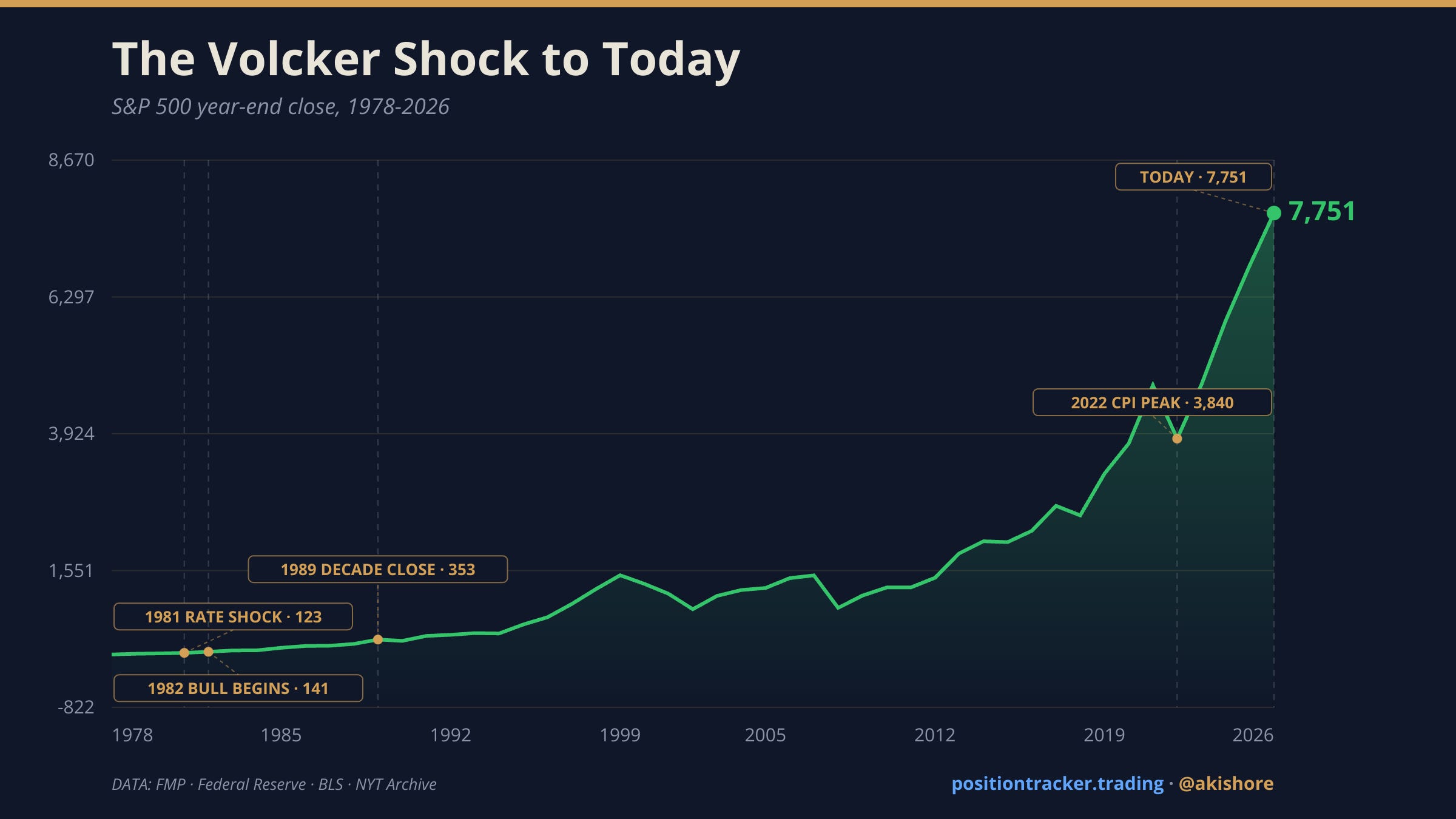
In June 1981, the Federal Reserve pushed the Fed Funds rate to 20% to break inflation running at 14.8%, the most aggressive tightening cycle in Fed history. The market absorbed the full cost of it. The S&P 500 bottomed at 102.42 on August…
Afternoon update
$LITE fell 16.57% and Marvell 10.68% this afternoon as investor skepticism grew over Marvell's $115B all-stock acquisition of Lumentum. • Lumentum…
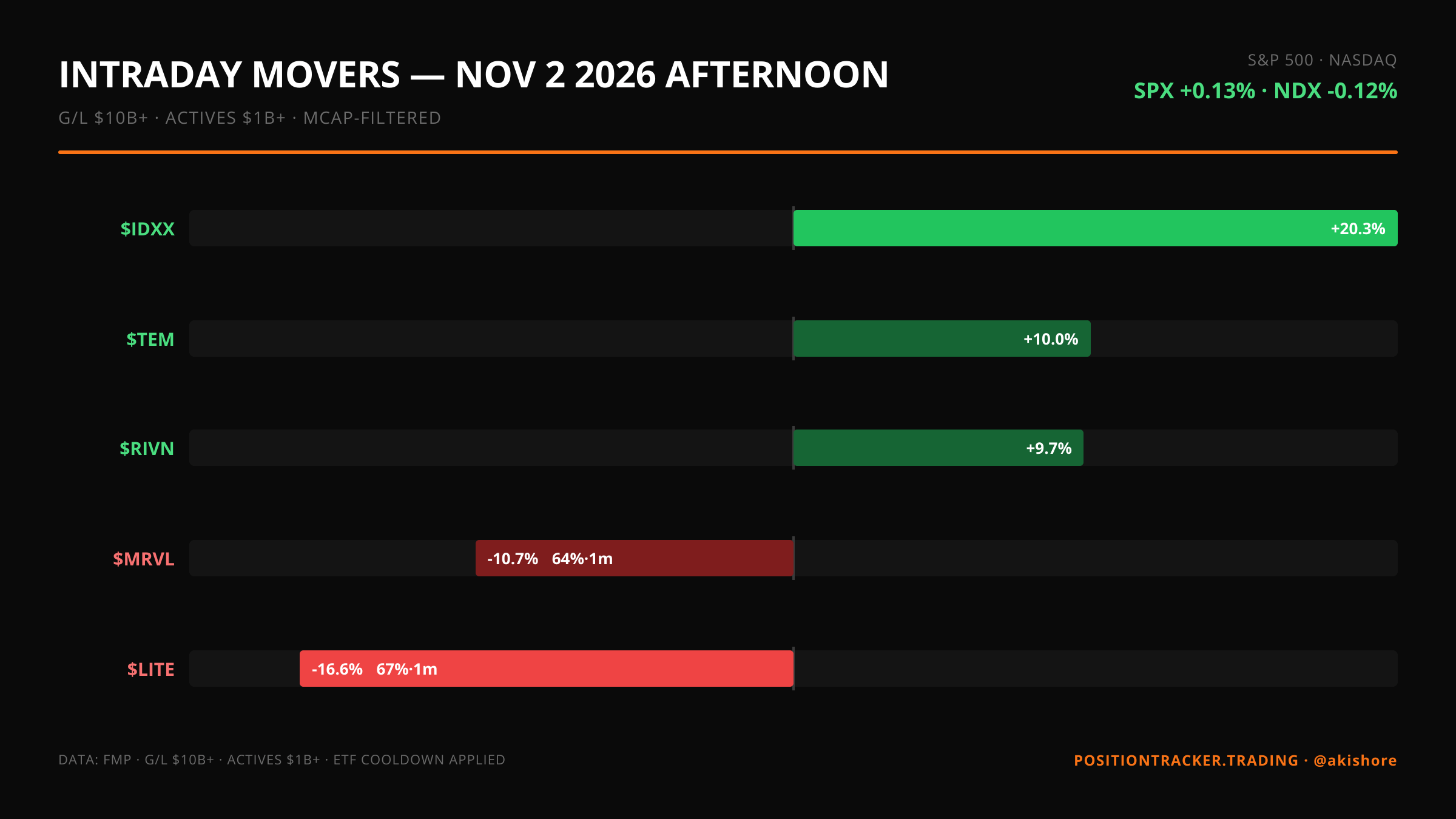
$LITE fell 16.57% and Marvell 10.68% this afternoon as investor skepticism grew over Marvell's $115B all-stock acquisition of Lumentum. Lumentum closed at $701.43 ($62.9B market cap). The deal, valued at $115B by enterprise value, gives Marvell shareholders 67% of the combined…